How to Measure Your Windows
Five minutes with a steel tape measure is all it takes. Measure in inches, write everything down before you start configuring, and remember: measure every window, even ones that look identical — they rarely are.
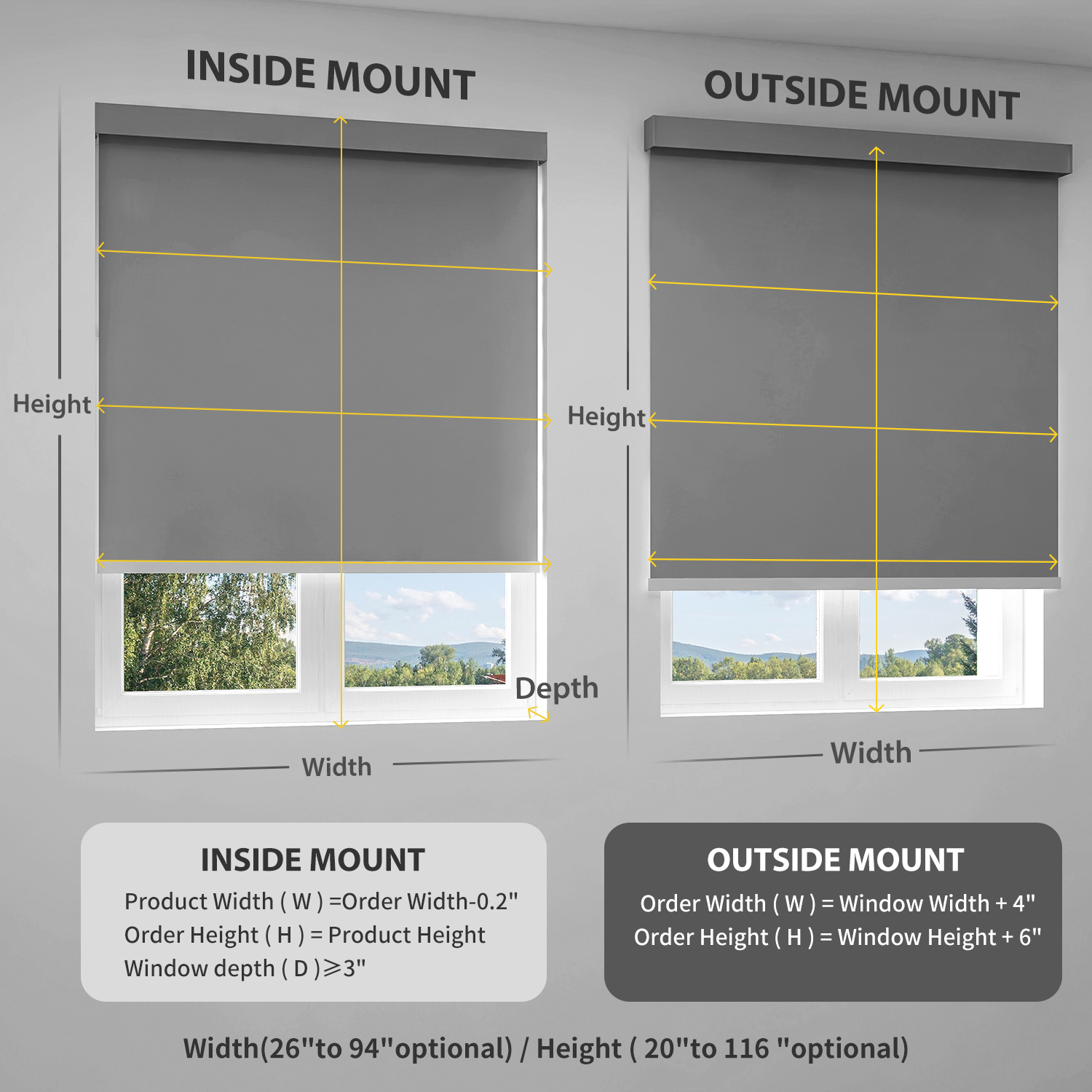
First, choose: inside or outside mount
Inside mount sits inside the window recess for a clean, built-in look. You need about 3" of flat depth for the hardware. Outside mount hangs on the wall above the window, covering the whole opening — the better choice for shallow recesses, cranks and handles that stick out, or maximum light blocking.
Inside mount: measure the opening
- Width: measure the recess at the top, middle, and bottom. Use the narrowest of the three.
- Height: measure left, center, and right. Use the tallest.
- Give us the exact opening size — don't subtract anything. The factory makes the small clearance deductions so the blind fits and rolls freely.
Outside mount: measure the coverage
- Width: the opening plus at least 1.5" on each side to block light gaps.
- Height: from where the top of the blind will mount (usually 2–3" above the opening) down to the sill — or lower if you want it to drop past.
The three classic mistakes
- Using a cloth tape or a phone app instead of a steel tape measure.
- Measuring the old blind instead of the window — old blinds already have deductions built in.
- Assuming two windows match. Measure both. It's 60 seconds that saves a remake.
Two safety nets, built in: the configurator can double-check your numbers against a photo of your window, and nothing goes into production until you review and approve every measurement. Our range covers widths of 21–90" and heights of 22–118" (98" for the S1 valance) — bigger than that, contact us.